Exploring the Forbidden City: The Functional Codes of Over 70 Palaces
The Forbidden City has a total of more than 70 palaces of all sizes, what were they used for? Let’s find out!
The outer court (equivalent to the modern Capitol + National Ceremonial Centre)

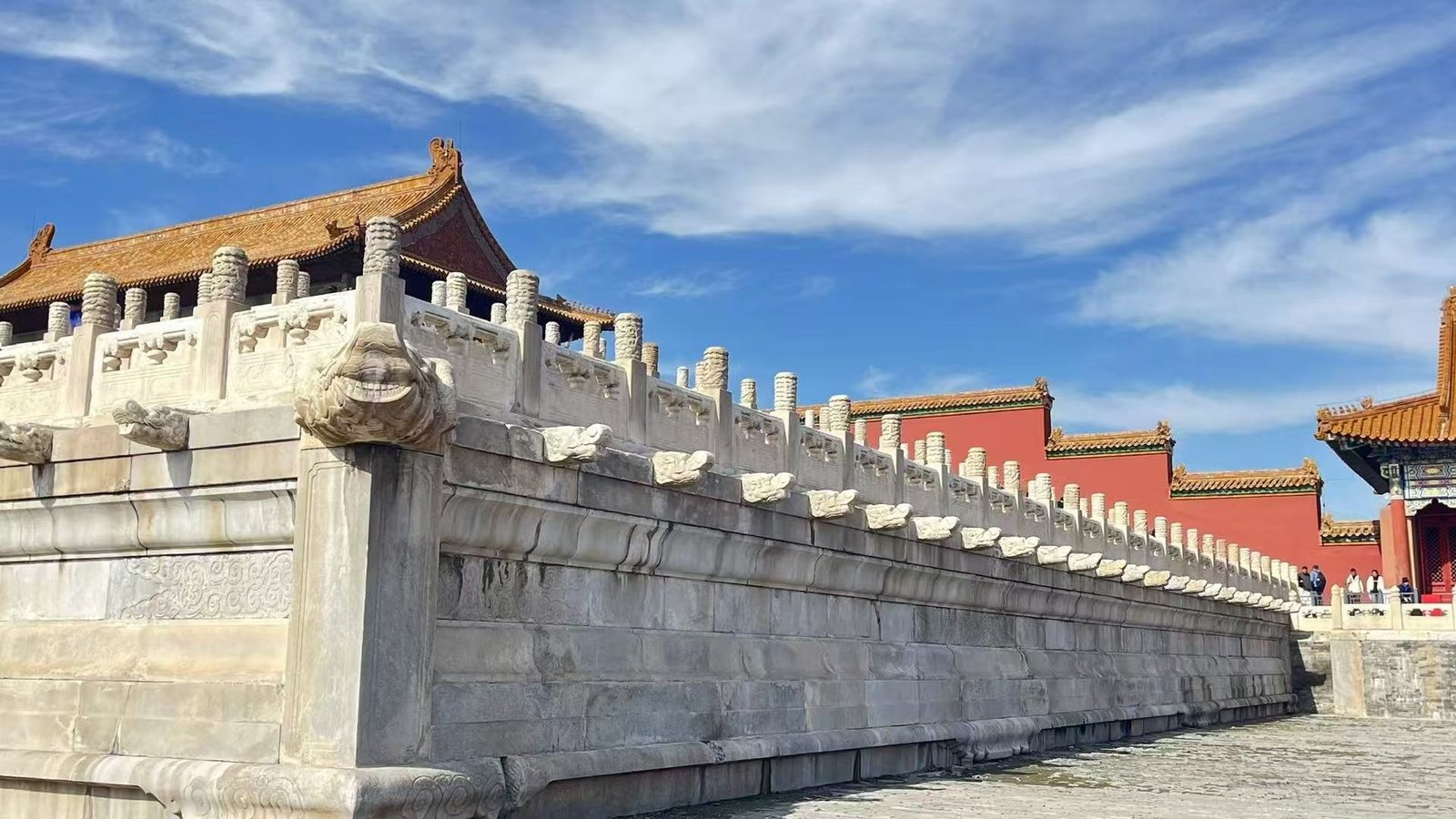
The Hall of Supreme Harmony ( Taihe dian ) : a place for national ceremonies, such as the Emperor’s enthronement, New Year’s celebrations, and major diplomatic ceremonies.
Hall of Preserving Harmony ( Baohe dian ) : dressing room for emperors during the Ming Dynasty, state banquet hall and ultimate examination hall for imperial examinations during the Qing Dynasty (similar to the national finals of modern civil service exams).
Hall of Central Harmony ( Zhonghe dian): the emperor’s lounge before ceremonies, and the verification of sacrificial documents and agricultural tools before sacrifices (similar to the preparation room before the president signs important documents).
Hongyi Pavilion ( Hong yi ge ) : the silver storehouse of the Ministry of the Interior in the Qing Dynasty, where gold, silver, coins, jewellery, jade, gold and silver utensils were collected and stored.
Tiren Pavilion(Tiren ge): The Qing Dynasty stored satin, yarn, silk, damask, silk, cloth and other items.
The Hall of Literary Brilliance ( Wenhua dian ) : the place where the Qing Dynasty held the ceremony of the Emperor’s feast.
WenWenyuan Pavilion ( Wenyuan ge ) : the library of the Qing Dynasty, once specialised in the storage of the Siku Quanshu.
Cabinet Hall (Neige datang) : in the Qing Dynasty is the office of the university scholar, the main duty is to assist the emperor to deal with political affairs, similar to the emperor’s think tank.
South Sanshou (Nan sansuo): the place where the royal sons lived during the Qing Dynasty.
The buildings to the east of Nansanshou are the Imperial Pharmacy and the Imperial Hospital.
the Archery Pavilion (Jian ting) : It is the place where the Qing Dynasty emperor and his descendants practiced horseback archery.
Hall of Martial Valor (Wuying dian): the Ming Dynasty was once the emperor’s residence and summoned the ministers of the place; after the Qing Dynasty, dorgon in this regency, after the Kangxi for editing, engraving, printing the place of the imperial books.
Xian’an Palace: A place of learning for the sons and daughters of Manchurian officials and eunuchs during the Qing Dynasty (A school specializing in the training of important national cadres).
Yude tang: It was the duty room of the Qing Dynasty scholar, specialising in publishing, engraving and decorating books.
Nanxun Hall (Nanxun dian) : It‘s a palace dedicated to the collection of portraits of emperors and empresses.
The Inner Court (equivalent to the White House living quarters + private museums)

Palace of Heavenly Purity (Qianqing gong): a place to live and deal with daily political affairs
Hall of Union (Jiaotai dian): Jiao Tai Hall for the Queen’s Thousand Autumn Festival to receive the celebration of the gift of the Queen’s birthday to receive the celebration of the gift of the place.
Palace of Earthly Tranquility (Kunning gong): Ming and Qing dynasties, Shunzhi, Kangxi years the Queen’s place of residence, after the Yongzheng for the place of worship.
Hall of Mental Cultivation (Yangxin dian): The Ming Dynasty and the Qing Dynasty during the Kangxi for the Palace Office, after the Yongzheng for the emperor’s place of residence.
East and West six palaces: for the Ming and Qing dynasty consort living place.
East six palaces (Jingren Palace, Zhongzcui Palace, Chengqian Palace, Jingyang Palace, Yonghe Palace, Yanxi Palace).
West six palaces (Chuxiu Palace, Yikun Palace, Yongshou Palace, Xianfu Palace, Changchun Palace, Qixiang Palace).
Palace of Compassion and Tranquility (Cining gong): Ming and Qing Dynasties, the Empress Dowager lives.
Palace of Tranquil Longevity (Ningshou gong) : the Qing Dynasty for the Consort, concubines and other concubines of the first emperor to live, the Qianlong years rebuilt as the Qianlong abdication of the pension used, Cixi Wannian also lived in Ning Shou Palace for a time!
Shou’an Palace: the residence of the late emperor’s consorts and concubines during the Qing Dynasty.
Shoukang Palace: the Qing Dynasty for the Imperial Consort, concubines, and other concubines of the late emperor lived
Yinghua Hall: a place for the Empress Dowager and the imperial concubines to worship Buddha in the Ming and Qing dynasties.
Chonghua Palace: the place where Qianlong lived after his wedding, and later the place where the emperor gave the ministers a tea banquet and a joint sentence during the New Year’s Eve.
Yuking Palace: the Crown Prince of the Qing Dynasty, the place where the Prince lived
Fengxian Hall: Ming and Qing royal family worship ancestors of the family temple
Jaigong: for the emperor before the ceremony of heaven and earth fasting place
Yuhua Pavilion: a Buddhist temple
Changyin Pavilion: the place where the Emperor and the Empress listened to the theatre
Shufangzhai: the place where the emperor and the empress listened to the theatre
Yanqing Hall: the place where the Emperor prayed for the people’s blessing when the Spring Festival started.
The Hall of Heavenly Vaults: a place for Taoist activities in the palace, used for sacrifices.
Jianfu Palace: the collection of rare cultural relics of the lender
North five: the Ming Dynasty for the low-level concubines and courtesans live in the place, the early Qing Dynasty for the Prince lived, after the Prince moved to live in the South three were changed to Ruyi Hall, Shou Pharmacy, Ceremony Room, the four executive library, antique room.
Tea library: the management of the storage of a variety of tea institutions, in the east courtyard of the Yanxi Palace.
Satin library: management of the storage of all kinds of satin clothing institutions, in the east courtyard of the Yanxi Palace.
Imperial Garden: for the emperor, consort recreation and leisure garden, which includes the building has a pile of Xiushan Royal Pavilion, Li Zaodang, Fubi Pavilion, Wanchun Pavilion, Jiangxue Xuan; West building has Yanhui Pavilion, Biyu Zhai, Chengrui Pavilion, Qianqiu Pavilion, Nourishing Zhai, and the Four Divine Ancestral Shrines, Well Pavilion, Deer Terrace, etc.
Jianfu Palace West Garden: built in the Qianlong period, for the emperor, consort rest, entertainment places, there are Yanchun Pavilion, Jing Sheng Zhai, Bilin Hall, Ning Hui Hall and other buildings, garden style is different from the symmetry of the Imperial Garden rigorous, more than some of the feeling of the Jiangnan gardens. Qianlong very much like this garden, often will live here!
Ningshou Palace Garden: Ningshou Palace for the matching garden, built in the Qianlong period, for the Qing emperor, consort rest, entertainment venues, the main buildings in the garden are ancient HuaXuan, Xuhui Pavilion, suppression of Zhai, Suichu Hall, Bamboo Hall, the collection of reward building, YanQi building, three friends Xuan, shouxiu Pavilion, Biluo Pavilion, FuWangGe, YuZiXuan, weiqinzhai, and so on.
Cining Palace Garden: It is the place where the empress dowager and concubines of the Ming and Qing Dynasties rested and worshiped Buddha. In the garden there were Linxi Guan, Xianruo Pavilion and other buildings. The terrain is flat and open, dill flowers and trees, stacked stones and pools, intended to make the Empress Dowager, the concubines did not bother to trek the labour of the interest of the mountains and forests.